


Open Concept vs. Defined Spaces: What Actually Works Today?

Updated: May 11
Open concept had a long run as the “luxury default”: bigger sightlines, brighter rooms, effortless entertaining. But real life has changed the brief. With more work-from-home days, busier households, and a stronger desire for calm, today’s most livable high-end homes aren’t fully open or fully closed.
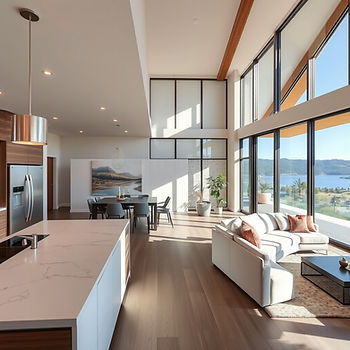
The Trend Shift: From “Wide Open” to “Purposeful Open”
Open concept isn’t disappearing, it’s being edited. Instead of one giant room that tries to do everything, homeowners are asking for:
Defined zones for work, rest, and gathering
Better sound control
Cleaner sightlines (less visual clutter)
Flexible layouts that can change with the day
The new goal isn’t openness for its own sake. It’s flow with boundaries.

Real-Life Functionality, What People Love (and Hate) About Open Layouts.
Open-concept layouts are widely loved for their sense of openness, natural light flow, and the ability to create a more social, connected environment, but in real life, they often come with trade-offs that people don’t anticipate. One of the biggest frustrations is exactly what many homeowners experience: the lack of separation means everything travels, sound, clutter, and especially smells. Cooking odors don’t stay contained in the kitchen; they linger in upholstery, drift into living areas, and can make the entire home feel less fresh, which for some people even discourages cooking altogether. While open layouts photograph beautifully and feel expansive, they can fall short in day-to-day functionality. That’s why more thoughtful design today focuses on creating subtle divisions, through millwork, partial walls, glass partitions, or strategic ventilation, so you maintain visual openness without sacrificing comfort and practicality.
What open concept still does well:
Natural light spreads farther
Social connection (cooking while talking, hosting feels easier)
Perceived space (especially in smaller homes)
Where it breaks down in real life
Noise travels everywhere (TV, blender, meetings, kids)
Mess is always visible (kitchen clutter becomes the “decor”)
No privacy for work calls, homework, or downtime
Competing functions in one room (cooking + relaxing + working = chaos)
That’s why many modern renovations keep openness, but add structure.

Zoning in: The Make-or-Break Factor
Whether your home is open or defined, zoning is what makes it livable.
Good zoning answers:
Where do people naturally gather?
Where do you need quiet?
What needs to be hidden vs. on display?
How do you move through the space without cutting through “activity zones”?
Easy zoning tools that work right now
Area rugs to anchor living and dining zones
Lighting layers (pendants over dining, lamps in living, task lighting in kitchen)
Furniture placement (sofas and consoles as “invisible walls”)
Ceiling or floor changes (beams, ceiling drops, different flooring materials)
Zoning is the difference between “open and airy” and “open and stressful.”
Flow: Connection Without Collision
Flow is about how you move through the home, without interrupting what’s happening in it. In fully open layouts, flow can become a problem when the walkways cut through the living room seating or the kitchen becomes a hallway or dining feels like it’s floating in the middle of everything. Today’s best layouts create clear circulation paths so spaces feel connected, not collided.
A simple rule of thumb I use :If you have to walk through a “use zone” to get somewhere, the layout will feel off.
Acoustics: The Problem No One Plans For (Until It’s Too Late)
Open concept amplifies sound. Hard surfaces (wood floors, stone counters, high ceilings) make it worse.
If you want openness and comfort, acoustics need to be part of the plan:
Upholstered furniture and textured fabrics
Rugs with quality pads
Drapery or woven shades
Acoustic wall panels (now available in design-forward styles)
Bookshelves and layered decor (they actually help)
Noise control is one of the biggest reasons people are moving away from fully open layouts.

The New Standard: “Soft Separation”
Soft separation is the sweet spot: visual openness + functional boundaries. Instead of full walls, we designers are using:
Slatted wood dividers
Glass partitions (clear, reeded, or framed)
Half walls with built-ins
Archways or cased openings
Pocket doors (open when you want, closed when you need)
Double-sided fireplaces
Built-in banquettes to define dining without closing it off
This approach keeps the home feeling bright and connected, while giving each area a job. So… What Actually Works Today?
Most homes benefit from a hybrid layout that is open where you gather (kitchen + living) but that defines where you focus (office, reading nook, homework zone) and Buffer where you transition (entry, pantry, mudroom, hallway moments)
The best question isn’t “open or closed? ”It’s: Where do you need connection and where do you need separation?
Quick Guide: Which Layout Fits Your Life?
Ask yourself this questions, and you will be able to define much better what works best in your space:
Entertain often
Prefer a casual, communal feel
Keep surfaces relatively clear
Don’t need much acoustic privacy
then more open works best for you.
Work from home regularly
Have different schedules in the household
Want calmer, quieter rooms
Prefer less visual clutter
then more defined works best for you.
Soft separation works best if you:
Want openness and order
Need flexibility throughout the day
Want a home that feels modern but livable
Open concept had its moment and it still has value. But today’s design is less about removing every wall and more about creating a home that supports real routines. The future isn’t fully open or fully closed. It’s intentional flow, smart zoning, and soft separation a home that looks beautiful and works, and most important, works for you and your lifestyle.
I hope these questions and information help you define what type of space fits you and your lifestyle best and if you may need any further help generating that space layout, don't hesitate on giving me a call.
Here when you need interior design consultation,
Truly yours,
Daniella Acuna M.


Comments